
· 123 ToDo Team · Tips & Tricks · 16 min read
Small Steps, Big Dreams: How Daily Progress Builds Extraordinary Success
Great achievements aren't accidents - they're the sum of small, consistent actions guided by a clear vision. Learn the proven formula for turning ambitious goals into reality.

The Journey of a Thousand Miles Begins With Knowing Where You’re Going
You’ve heard the ancient wisdom: “A journey of a thousand miles begins with a single step.”
Beautiful. Inspiring. And completely incomplete.
Because here’s what they don’t tell you: That first step means nothing if you’re walking in the wrong direction.
The real secret to achieving extraordinary things isn’t just about taking action. It’s about knowing exactly where you’re headed before you take that first step - and then having the discipline to keep walking, even when the path gets tough.
Great things don’t just happen. They’re built. Brick by brick. Day by day. With intention, planning, and unwavering focus on the bigger picture.
Let’s talk about how you transform big dreams into inevitable reality.
The Mathematics of Achievement: Why Small Steps Multiply Into Greatness
Here’s a powerful formula that will change how you think about goals forever:
The 1% Rule: The Compound Effect of Daily Improvement
If you improve by just 1% every day for one year, you don’t end up 365% better. You end up 37 times better.
The math is stunning:
- 1.01³⁶⁵ = 37.78
That’s the power of compound growth. Small, consistent improvements don’t add up - they multiply.
But here’s the flip side that nobody talks about:
- 0.99³⁶⁵ = 0.03
If you decline by just 1% every day, you don’t stay roughly the same. You shrink to nearly nothing.
This is why consistency matters more than intensity. This is why showing up daily beats sporadic bursts of motivation. This is why the smallest step forward is infinitely more valuable than standing still.
The Progress Formula: Goal Achievement in Three Variables
Every major achievement follows this simple equation:
SUCCESS = (Clear Vision × Consistent Action) / Time
Let’s break that down:
Clear Vision - Your end goal, defined with crystal clarity Consistent Action - Daily steps toward that vision Time - The patience to let compound growth work
Notice what’s missing? Luck. Talent. Perfect circumstances.
You don’t need those. You need clarity, consistency, and patience.
The Kaizen Philosophy: 1% Better Every Day
The Japanese concept of “Kaizen” - continuous improvement - revolutionized manufacturing and can revolutionize your life.
Toyota didn’t become a global powerhouse through massive innovations. They became dominant through countless tiny improvements, implemented consistently, across decades.
You don’t need to reinvent yourself overnight. You need to be 1% better than yesterday.
Writing a book? 500 words a day = 182,500 words a year = two full-length novels.
Learning a skill? 30 minutes daily = 182.5 hours a year = intermediate proficiency in most skills.
Building a business? One client conversation daily = 365 conversations = inevitable growth.
Small steps aren’t just good enough. They’re the only thing that actually works.
Why You Must Start With the End Goal: The Power of Vision
Here’s the uncomfortable truth most people ignore: You can’t build something great if you don’t know what you’re building.
Imagine hiring a construction crew and saying, “Just start building something. We’ll figure out what it is later.”
Absurd, right? Yet that’s exactly how most people approach their goals. They know they want “success” or “happiness” or “better life,” but they haven’t defined what those things actually mean.
The Reverse Engineering Principle
Every great achievement starts at the end and works backward.
Start with the vision:
- What does success look like, specifically?
- What will you have accomplished?
- How will your life be different?
- What will you see, feel, experience when you arrive?
Then work backward:
- What needs to happen right before you reach that goal?
- What needs to happen before that?
- And before that?
- All the way back to… what can you do today?
This is how NASA put humans on the moon. They started with “human walking on lunar surface” and worked backward through thousands of necessary steps until they reached “today, we begin designing the spacecraft.”
This is how every successful entrepreneur builds a company. Vision first. Roadmap second. First step third.
The Clarity Advantage: Why Vague Goals Fail
Psychologist Edwin Locke’s research on goal-setting revealed something crucial: Specific, challenging goals lead to higher performance than vague, easy goals 90% of the time.
“I want to be healthier” - Vague. Unmeasurable. Unlikely to happen.
“I will walk 10,000 steps daily for 90 days” - Specific. Measurable. Highly achievable.
“I want to write more” - Vague. No accountability. Probably won’t happen.
“I will write 500 words every morning before 9am for 6 months” - Specific. Clear. This becomes reality.
Your brain needs a clear target. Without one, it has nothing to aim for. With one, every decision becomes simpler: “Does this move me toward my goal or away from it?”
The Daily Discipline: How to Stay Focused on the Bigger Picture
Having a clear goal is essential. But staying focused on that goal through months or years of daily work? That’s where most people struggle.
Here’s how to maintain that focus when motivation fades and obstacles appear.
The Two-List Strategy: Focus Through Elimination
Warren Buffett’s personal pilot once asked him for career advice. Buffett told him to do this exercise:
Step 1: Write down your top 25 goals.
Step 2: Circle your top 5 most important goals.
Step 3: Everything you didn’t circle? “Avoid at all costs. No matter what, these things get no attention until you’ve succeeded with your top 5.”
This is brutal clarity. Most people fail because they’re pursuing too many goals simultaneously. Their energy is scattered. Their focus is diluted.
One or two major goals at a time. That’s the secret.
Everything else? On hold. Not forgotten - just deferred until the primary mission is accomplished.
The Weekly Reflection: Taking Stock Without Losing Momentum
Here’s a critical truth: Sometimes you need to pause progress to ensure you’re still moving in the right direction.
Every Sunday (or your preferred day), spend 30 minutes asking yourself:
Progress Check:
- What did I accomplish this week toward my big goal?
- How many small steps did I take?
- Am I closer than I was 7 days ago?
Direction Check:
- Am I still working toward the right goal?
- Has anything changed that requires adjusting my approach?
- Are my daily actions aligned with my bigger picture?
Energy Check:
- What’s working well that I should do more of?
- What’s draining energy without producing results?
- What can I eliminate, delegate, or simplify?
Planning Forward:
- What are my 3-5 most important tasks for next week?
- What’s my #1 priority?
- What obstacle might I face, and how will I handle it?
This isn’t procrastination disguised as planning. This is strategic reflection that keeps you on course.
Think of it as recalibrating your compass. You’re still moving forward - you’re just making sure you’re headed toward your destination, not wandering in circles.
The North Star Principle: Letting Your Goal Guide Every Decision
When you have a clearly defined end goal, decision-making becomes remarkably simple.
Every opportunity, every request, every potential task gets filtered through one question:
“Does this move me closer to my goal?”
Yes? Consider it. No? Decline it. Unsure? Probably no.
This is how focused people accomplish extraordinary things while seeming to have all the time in the world. They’re not doing more - they’re doing less. They’re just doing the right things.
Your end goal is your filter. Use it ruthlessly.
Embracing Setbacks: The Step-Back Strategy for Long-Term Success
Let’s address the elephant in the room: You will face setbacks. Guaranteed.
Progress is never linear. You’ll have bad days, bad weeks, sometimes bad months. You’ll encounter obstacles you didn’t anticipate. You’ll fail at things you expected to succeed at.
This doesn’t mean you’re failing. This means you’re building something worthwhile.
The Plateau Paradox: Why Progress Feels Invisible
There’s a deceptive phase in every major achievement that kills most people’s momentum: the plateau.
You’re working consistently. Doing everything right. But you’re not seeing results.
It feels like nothing is happening. Like you’re wasting your time. Like maybe this goal isn’t achievable after all.
This is the most dangerous moment in goal pursuit - and also the most important.
Research on skill acquisition shows that learning happens in jumps, not gradual slopes. You plateau for what feels like forever, then suddenly leap forward. Plateau again. Leap again.
The plateau isn’t proof you’re failing. The plateau is proof you’re about to breakthrough.
The Strategic Retreat: When Stepping Back Moves You Forward
Sometimes the bravest and smartest thing you can do is pause.
Not quit. Pause.
If you’re burning out, pushing through rarely works. You’ll just burn faster until you collapse completely.
Instead, recognize the warning signs:
- Dreading tasks that used to energize you
- Quality of work declining despite effort
- Physical exhaustion beyond normal tiredness
- Lost sight of why this goal mattered
When these appear, take a strategic step back:
Reassess - Is this still the right goal? Has the target shifted?
Rest - Give yourself permission to recover without guilt.
Reflect - What got you here? What needs to change?
Refine - Adjust your approach based on what you’ve learned.
Resume - Return with renewed clarity and energy.
This isn’t failure. This is wisdom.
A marathon runner who stops to check the map isn’t giving up on finishing the race. They’re ensuring they finish the right race.
The Setback Success Formula: Turning Obstacles Into Opportunities
Every setback contains valuable information if you know how to extract it.
When something goes wrong, ask these questions:
What can I learn?
- What does this reveal about my approach?
- What assumption was I making that turned out wrong?
- What do I now know that I didn’t before?
What can I control?
- What factors were within my control?
- What can I do differently next time?
- What systems can I put in place to prevent this?
What can I salvage?
- Was anything gained even though the primary goal failed?
- What skills did I develop?
- What relationships did I build?
How can I adjust?
- What needs to change about my approach?
- Is the timeline unrealistic?
- Do I need different resources or support?
Olympic athletes don’t make it to the podium without falling countless times. They make it because they learn from every fall.
Your setbacks are either expensive lessons or wasted pain. You choose which.
The Planning Imperative: Why Great Things Require Great Plans
“Failing to plan is planning to fail” sounds cliché because it’s devastatingly true.
Let’s talk about how to create plans that actually work.
The 3-Horizon Planning Framework
Professional strategists use a three-horizon approach to balance long-term vision with short-term action:
Horizon 3: The Dream (3-5 years) Your ultimate vision. The big, audacious goal. The thing that seems almost impossible but captures your imagination.
Example: “Build a successful consulting business serving Fortune 500 clients.”
Horizon 2: The Bridge (6-12 months) The major milestones that connect today to your dream. These are still challenging but feel more achievable.
Example: “Land first three paying clients and develop proven methodology.”
Horizon 1: The Steps (This week/month) The specific, actionable tasks you can execute right now. These are concrete and immediately doable.
Example: “Complete business plan, create website, reach out to 20 potential clients.”
Here’s the magic: Horizon 3 provides direction. Horizon 2 provides milestones. Horizon 1 provides daily focus.
You need all three. Without Horizon 3, you’re building without a blueprint. Without Horizon 1, you’re dreaming without doing. Without Horizon 2, you have no bridge connecting dreams to action.
The Reverse Deadline Technique
Work backward from your ultimate deadline:
If your goal is 12 months away:
- What must be done by Month 9?
- What must be done by Month 6?
- What must be done by Month 3?
- What must happen this month?
- What must happen this week?
- What can you do today?
This creates a critical path - the sequence of necessary actions that must happen on schedule.
Suddenly, your overwhelming goal becomes a series of manageable tasks.
The Flexible Plan: Building in Adaptation
Here’s the paradox of planning: You need a detailed plan, but you must be willing to change it.
Dwight Eisenhower famously said: “Plans are worthless, but planning is everything.”
The value isn’t in having the perfect plan. The value is in the clarity that comes from planning. In thinking through the path. In anticipating obstacles.
When reality hits and your plan needs adjustment? That’s not failure - that’s learning.
Your plan should be written in pencil, not permanent marker.
How 123 ToDo Keeps You Focused on What Matters
Everything we’ve discussed - clear goals, daily progress, strategic planning - requires one fundamental practice: writing things down and organizing them by importance.
This is where 123 ToDo becomes your achievement partner.
Vision to Velocity: Translating Goals Into Tasks
Your Horizon 3 big dream? That lives in your mind and heart.
But Horizon 2 milestones and Horizon 1 actions? Those need to live in your task system.
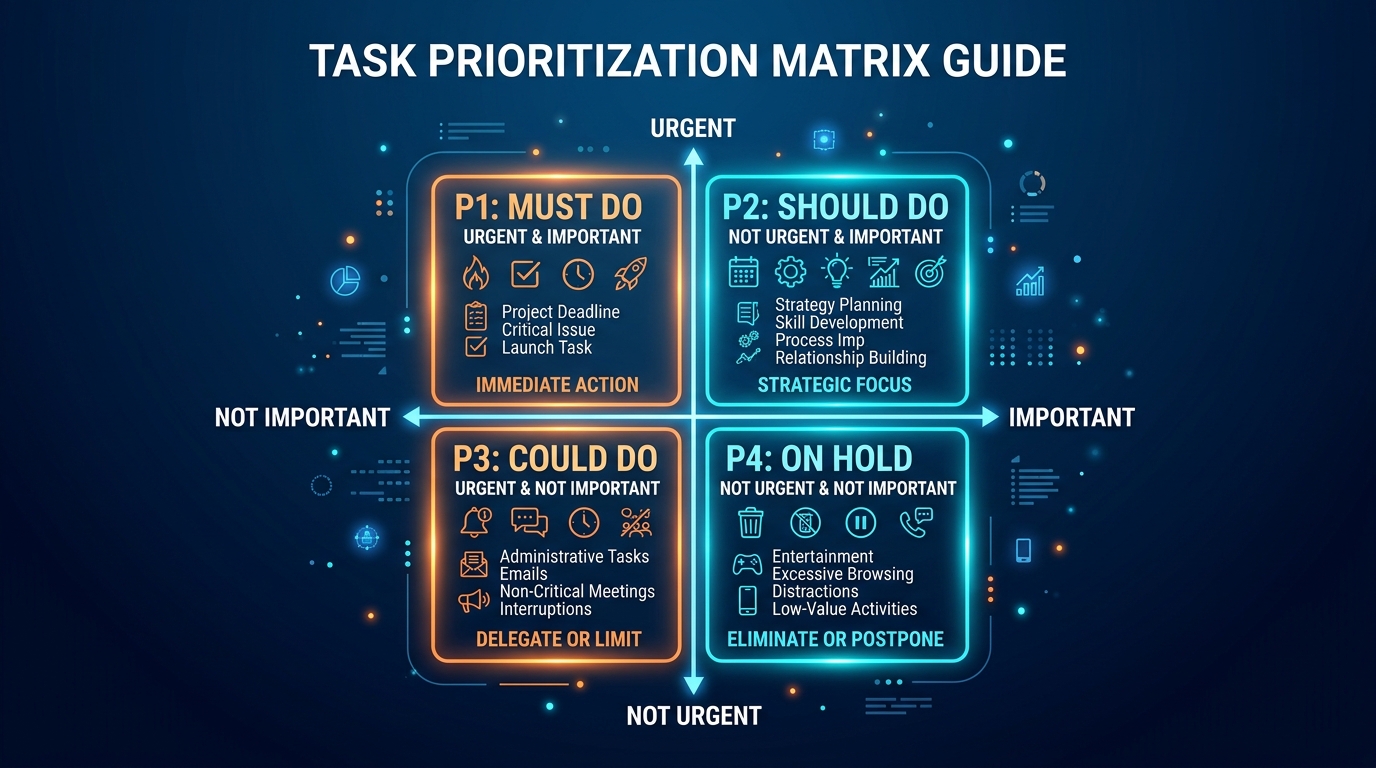
Must Do becomes your Horizon 1 critical path - the tasks that move you toward this week’s milestones.
Should Do houses your Horizon 2 work - important progress toward major milestones.
Could Do captures ideas and optional improvements that enhance but don’t define success.
On Hold tracks tasks waiting on external factors or future phases.
Suddenly, your enormous goal is translated into today’s actionable work.
The Daily Progress Tracker
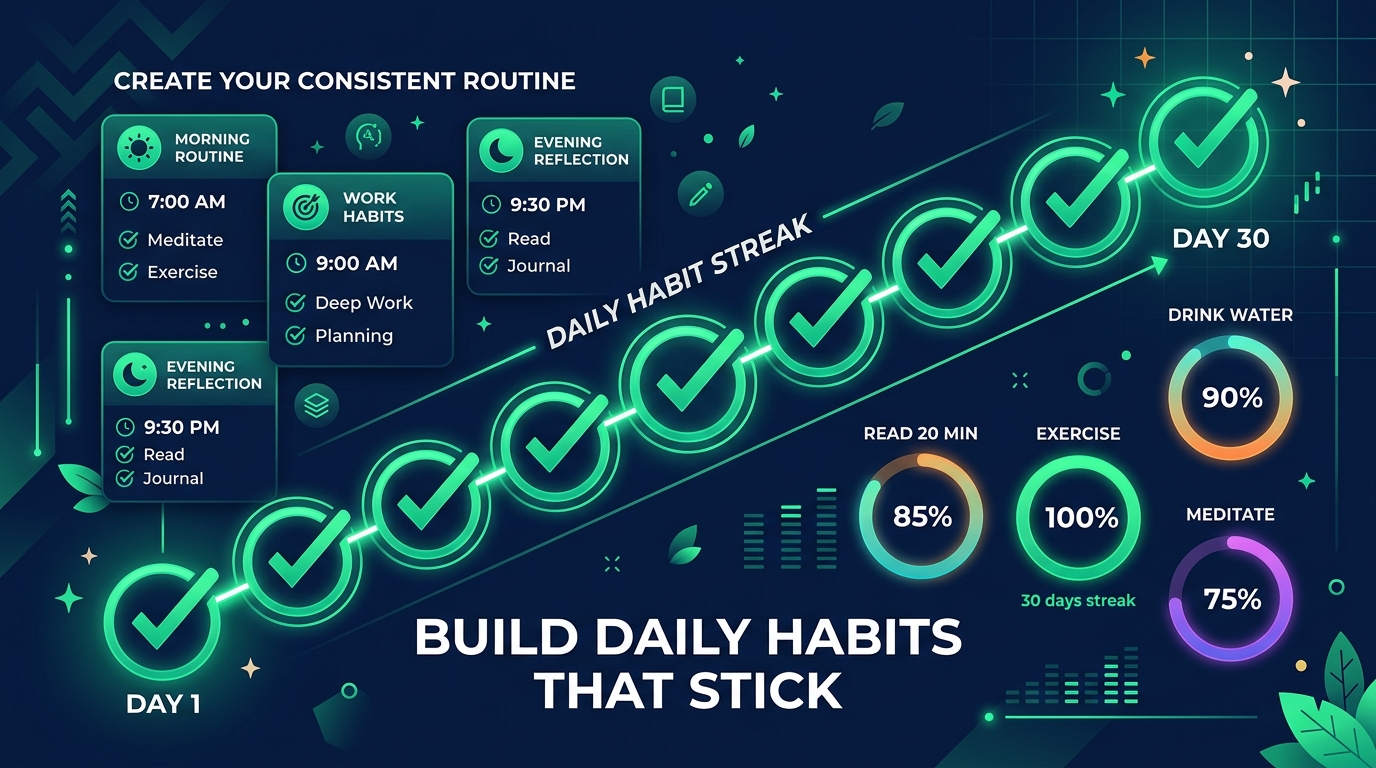
Remember the compound effect of 1% daily improvement? You need to actually see that progress to stay motivated.
Every task you complete is visible proof you’re moving forward. Every Must Do checked off is evidence your plan is working.
This visible progress matters psychologically. You’re not just trusting the process - you’re seeing the process work.
The Weekly Reflection Made Simple
Those weekly reflection questions we discussed? Your task list provides the data:
- Completed tasks = proof of progress
- Remaining Must Dos = areas needing focus
- Growing On Hold list = potential bottlenecks
- Could Dos being completed = possible distraction from priorities
Your task list becomes a dashboard for goal achievement.
Staying Focused When Everything Feels Urgent
Here’s the daily reality: Urgent but unimportant tasks will flood your attention.
The priority system protects your bigger picture:
Every new task gets evaluated: “Does this serve my Horizon 3 goal?”
- Yes and urgent? Must Do.
- Yes but not urgent? Should Do.
- Not directly related but nice to have? Could Do.
- Waiting on something? On Hold.
Your goal stays protected. Your focus stays sharp.
Real Stories: Small Steps, Extraordinary Outcomes
Maria’s Journey: From Chaos to Clarity
Maria wanted to transition from corporate marketing to freelance consulting. Big goal. Scary leap.
Year 1, Month 1: Defined Horizon 3 - “Replace corporate income with consulting revenue within 18 months.”
Year 1, Months 1-6: Horizon 2 milestone - “Build portfolio and land first 3 clients while still employed.”
Daily Horizon 1 actions: Update LinkedIn (Must Do), Research target clients (Should Do), Create case studies (Should Do).
Setback at Month 4: First pitch rejected. Took week to reflect. Realized pitch focused on features, not client outcomes. Adjusted approach.
Year 1, Month 8: Landed first client. Then second. Then third.
Year 1, Month 18: Gave notice at corporate job. Income replaced.
Year 2: Surpassed corporate income by 40%.
Maria’s reflection: “I didn’t believe in myself every single day. But I believed in the system. Small tasks, clear goal, consistent action. The math works.”
David’s Transformation: Marathon From Zero
David, 45, overweight, hadn’t exercised in 15 years. Goal: Complete a marathon.
Horizon 3: Cross marathon finish line in 12 months.
Horizon 2, Month 3: Run 5K without stopping. Horizon 2, Month 6: Run 10K comfortably. Horizon 2, Month 9: Complete half-marathon.
Horizon 1, Week 1: Walk 10 minutes daily (Must Do). Just walk.
Week 3: Add 30-second jog intervals. Week 6: Run 1 mile continuously.
Setback at Month 5: Shin splints. Took 2 weeks off running. Focused on swimming and cycling instead. Didn’t lose fitness, just adjusted approach.
Month 12: Finished marathon in 4 hours, 32 minutes.
David’s insight: “Every single run felt small. Insignificant. But 365 insignificant runs added up to something I never thought possible.”
Sophia’s Success: From Side Project to Business
Sophia wanted to turn her handmade jewelry hobby into a real business.
Horizon 3: Generate $5,000/month in revenue within 2 years.
Horizon 2, Year 1: Launch online store, create social media presence, make first $500/month.
Horizon 1, Month 1: Create 20 pieces (Must Do), photograph them (Must Do), research e-commerce platforms (Should Do).
Plateau at Month 6: Sales stalled at $200/month. Took step back. Surveyed customers. Learned they wanted customization options.
Adjustment: Added custom orders. Sales jumped.
Month 18: Hit $5,000/month target. Six months ahead of schedule.
Year 3: Business revenue $15,000/month. Hired first employee.
Sophia’s lesson: “The goal pulled me forward. The daily tasks pushed me along. The setbacks taught me. All three were necessary.”
Your Blueprint for Achievement: Starting Today
Ready to turn your own big dream into reality? Here’s your action plan:
Step 1: Define Your Horizon 3 (30 Minutes)
Answer these questions:
- What do I want to achieve in the next 1-3 years?
- What would success look like, specifically and measurably?
- Why does this matter to me deeply?
- How will my life be different when I achieve this?
Write it down. Make it specific. Make it vivid.
Step 2: Create Your Horizon 2 Milestones (30 Minutes)
Working backward from your Horizon 3 goal:
- What major milestones must I hit along the way?
- When should each milestone be achieved?
- How will I know when I’ve reached each milestone?
Write down 3-5 major milestones with target dates.
Step 3: Identify Your Horizon 1 Actions (15 Minutes)
Looking at your first milestone:
- What needs to happen this month to move toward it?
- What can I do this week?
- What’s the very first task I can complete today?
Add these to your task system as Must Do and Should Do items.
Step 4: Create Your Consistency Ritual (10 Minutes)
Decide on your daily practice:
- What time will I review my tasks? (Morning recommended)
- How will I track progress? (Completed tasks in 123 ToDo)
- When will I do my weekly reflection? (Sunday evening or Monday morning)
Schedule it. Protect it. Honor it.
Step 5: Plan for Obstacles (15 Minutes)
Anticipate challenges:
- What might make me want to quit?
- What external obstacles might arise?
- How will I handle setbacks when they appear?
- Who can support me when motivation fades?
Write down your strategies now, before you need them.
The Truth About Achievement Nobody Wants to Hear
Here it is, unvarnished:
Building something great will take longer than you hope, cost more energy than you expect, and require more persistence than feels reasonable.
And it will absolutely, definitely be worth it.
The people who achieve extraordinary things aren’t lucky. They aren’t more talented. They aren’t working with secret advantages.
They’re just clear about where they’re going, consistent in taking small steps, and committed to continuing even when progress feels impossible.
They know that goals don’t “just happen.” Goals are built. Daily. Deliberately. With planning, patience, and perspective.
Your Next Small Step Starts Now
You’ve just spent time reading about goal achievement. That was valuable. But reading doesn’t build dreams - action does.
So here’s your very next small step:
Open 123 ToDo right now and add these three tasks:
- Must Do: Define my Horizon 3 goal (30 minutes)
- Should Do: Identify my first milestone
- Should Do: List three actions I can take this week
That’s it. Three tasks. Five minutes to add them. But those three tasks are the beginning of your compound growth curve.
A year from now, you’ll look back at this moment and realize: This is when everything changed.
Not because you made some massive leap. Because you took a small step in the right direction - and then you kept stepping.
Start your journey with 123 ToDo →
Small steps. Big dreams. Inevitable success.
Your bigger picture is waiting. Time to start building it.
Quick Reference: The Achievement Formula
The Math:
- 1% daily improvement = 37x better in one year
- Success = (Clear Vision × Consistent Action) / Time
The Framework:
- Horizon 3: Your big dream (1-3 years)
- Horizon 2: Major milestones (6-12 months)
- Horizon 1: Daily actionable tasks (this week)
The Process:
- Define specific end goal
- Reverse engineer milestones
- Identify daily actions
- Execute consistently
- Reflect weekly
- Adjust as needed
- Continue relentlessly
The Mindset:
- Progress over perfection
- Consistency over intensity
- Direction over speed
- Learning from every setback
- Focus on the bigger picture
The Tools:
- Must Do: Critical path to milestones
- Should Do: Important progress work
- Could Do: Enhancement activities
- On Hold: Future phase work
Building something great? We’d love to hear about your journey. Share your goals, setbacks, and victories at support@123todo.com. Your bigger picture matters - and we’re cheering for you every step of the way. 🎯